Meny
Fjäderfenor och sillciklider – grupp i artregistret | Nordiska Ciklidsällskapet

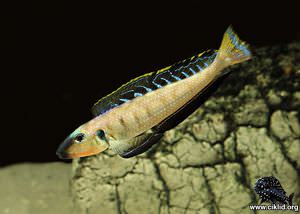
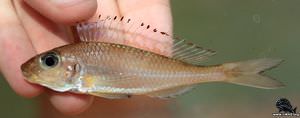
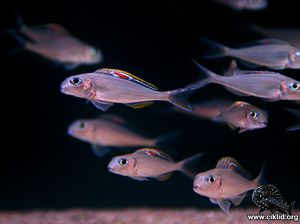
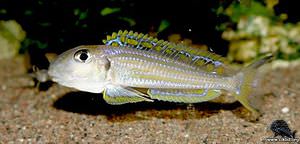
Fjäderfenor och sillciklider

Utbredning - Biotop

Förekommer i Tanganyikasjöns södra halva.
Sponsrad av

Fiskar som ingår i gruppen Fjäderfenor och sillciklider

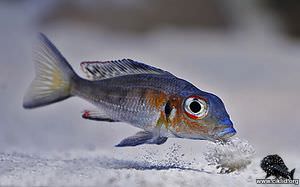
Asprotilapia leptura – Tanganyika leptura
© Mikael Westerlund
Temperatur 24-27,5°C
Volym 100 cm & 200 l
Längd 11 cm
pH 8,8-9,3
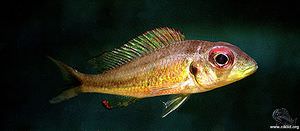
Aulonocranus dewindtii – Gulrandig aulonocranus
© Hans van Heusden
Temperatur 24-27,5°C
Volym 130 cm & 400 l
Längd 14 cm
pH 8,8-9,3
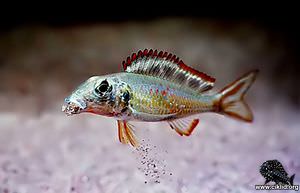
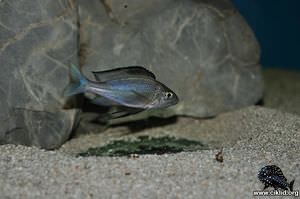
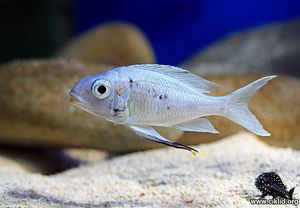
Benthochromis horii –
© Magdalena Kwolek-Mirek
Temperatur 24-27,5°C
Volym 200 cm & 720 l
Längd 17 cm
pH 8,8-9,3
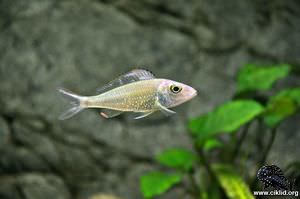
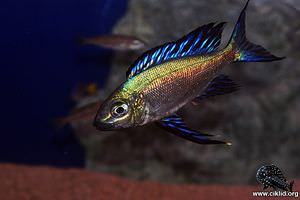
Benthochromis tricoti – giant featherfin
© Anders Larsson
Temperatur 24-27,5°C
Volym 160 cm & 540 l
Längd 18 cm
pH 8,8-9,3
Callochromis macrops –
© Niclas Olausson
Temperatur 24-27,5°C
Volym 100 cm & 150 l
Längd 15 cm
pH 8,8-9,3
Callochromis melanostigma –
© Carl Eklind
Temperatur 24-27,5°C
Volym 100 cm & 200 l
Längd 16 cm
pH 8,8-9,3
Callochromis pleurospilus – regnbågsciklid
© Carl Eklind
Temperatur 24-27,5°C
Volym 110 cm & 200 l
Längd 11 cm
pH 8,8-9,3
Callochromis stappersii –
© Niklas Markie
Temperatur 24-27,5°C
Volym 100 cm & 150 l
Längd 10 cm
pH 8,8-9,3
Cunningtonia  longiventralis –
© Martin Blazek
Cyathopharynx foae – Svart furcifer
© Peter Andersson
Temperatur 24-27,5°C
Volym 200 cm & 700 l
Längd 20 cm
pH 8,8-9,3
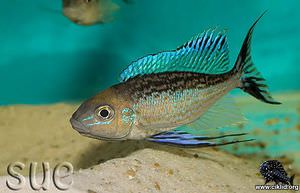
Cyathopharynx furcifer – Furcifer, Featherfin cichlid
© Magdalena Kwolek-Mirek
Temperatur 24-27,5°C
Volym 200 cm & 700 l
Längd 22 cm
pH 8,8-9,3
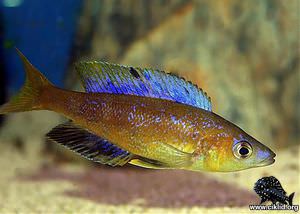
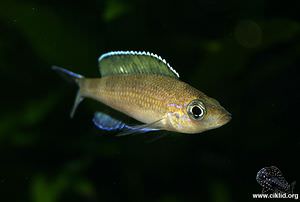
Cyprichromis coloratus – <i>Cyprichromis</i> sp.
© Anders Larsson
Temperatur 24-27,5°C
Volym 150 cm & 400 l
Längd 11 cm
pH 8,8-9,3
Cyprichromis leptosoma – Leptosoma
© Christian Alfredsson
Temperatur 24-27,5°C
Volym 150 cm & 500 l
Längd 8 cm
pH 8,8-9,3
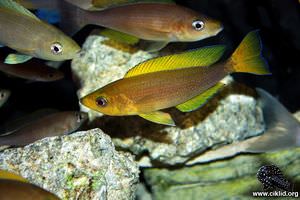
Cyprichromis microlepidotus – microlepidotus, golden leptosoma.
© Anders Larsson
Temperatur 24-27,5°C
Volym 150 cm & 400 l
Längd 12 cm
pH 8,8-9,3
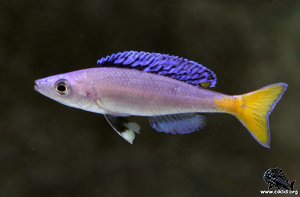
Cyprichromis pavo –
© Kamal H. Qureshi
Temperatur 24-27,5°C
Volym 150 cm & 350 l
Längd 12 cm
pH 8,8-9,3
Cyprichromis sp. "dwarf jumbo" –
© Max Bjørneskov
Cyprichromis sp. "leptosoma jumbo" –
© Mats Olofsson
Cyprichromis sp. "kibishi" – Lyrstjärtcyprichromis
© Jan Hommel
Temperatur 24-27,5°C
Volym 120 cm & 350 l
Längd 12 cm
pH 8,8-9,3
Cyprichromis zonatus – zebraleptosoma.
© Steen Christiansen
Temperatur 24-27,5°C
Volym 125 cm & 300 l
Längd 10 cm
pH 8,8-9,3
Ectodus descampsii –
© Magdalena Kwolek-Mirek
Temperatur 24-27,5°C
Volym 100 cm & 200 l
Längd 12 cm
pH 8,8-9,3
Ectodus sp. "descampsii ndole" – ndole-descampsii
© Steen Christiansen
Temperatur 24-27,5°C
Volym 100 cm & 200 l
Längd 12 cm
pH 8,8-9,3
Grammatotria lemairii –
© Adrian Indermaur
Temperatur 24-27,5°C
Volym 125 cm & 200 l
Längd 27 cm
pH 8,8-9,3
Haplotaxodon microlepis –
© Robin Hedström
Temperatur 24-27,5°C
Volym 150 cm & 400 l
Längd 26 cm
pH 8,8-9,3
Haplotaxodon trifasciatus –
© Magdalena Kwolek-Mirek
Temperatur 24-27,5°C
Volym 130 cm & 400 l
Längd 19 cm
pH 8,8-9,3
Lestradea perspicax –
© Turgut Sen
Temperatur 24-27,5°C
Volym 120 cm & 200 l
Längd 12 cm
pH 8,8-9,3
Microdontochromis tenuidentatus –
© Magdalena Kwolek-Mirek
Ophthalmotilapia boops – boops.
© Michael Persson
Temperatur 24-27,5°C
Volym 200 cm & 720 l
Längd 15 cm
pH 8,8-9,3
Ophthalmotilapia heterodonta –
© Magdalena Kwolek-Mirek
Ophthalmotilapia nasuta –
© Niclas Olausson
Ophthalmotilapia sp. "paranasuta" –
© Matthijs Meindertsma
Ophthalmotilapia ventralis – sagociklid, ventralis.
© Niclas Olausson
Temperatur 24-27,5°C
Volym 150 cm & 400 l
Längd 15 cm
pH 8,8-9,3
Paracyprichromis brieni –
© Robin Hedström
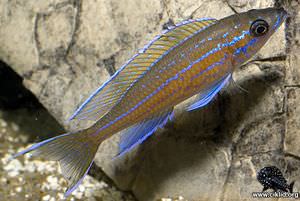
Paracyprichromis nigripinnis – Blue neon, blå neon
© Michael Persson
Temperatur 24-27,5°C
Volym 125 cm & 300 l
Längd 11 cm
pH 8,8-9,3
Perissodus eccentricus –
© Adrian Indermaur
Temperatur 24-27,5°C
Volym 130 cm & 300 l
Längd 16 cm
pH 8,8-9,3
Perissodus microlepis –
© Albin Ekenberg
Temperatur 24-27,5°C
Volym 100 cm & 200 l
Längd 14 cm
pH 8,8-9,3
Plecodus elaviae –
© Adrian Indermaur
Temperatur 24-27,5°C
Volym 300 cm & 1200 l
Längd 32 cm
pH 8,8-9,3
Temperatur 24-27,5°C
Volym 130 cm & 300 l
Längd 12 cm
pH 8,8-9,3
Plecodus paradoxus –
© Magdalena Kwolek-Mirek
Temperatur 24-27,5°C
Volym 200 cm & 700 l
Längd 28 cm
pH 8,8-9,3
Plecodus straeleni –
© Magdalena Kwolek-Mirek
Temperatur 24-27,5°C
Volym cm & 720 l
Längd 15 cm
pH 8,8-9,3
Xenochromis hecqui –
© Adrian Indermaur
Temperatur 24-27,5°C
Volym 200 cm & 600 l
Längd 30 cm
pH 8,8-9,3
Xenotilapia bathyphila –
© Andrew Wood
Temperatur 24-27,5°C
Volym 80 cm & 160 l
Längd 10 cm
pH 8,8-9,3
Xenotilapia boulengeri –
© Jimmy Ulin
Temperatur 24-27,5°C
Volym 130 cm & 300 l
Längd 16 cm
pH 8,8-9,3
Temperatur 24-27,5°C
Volym 130 cm & 300 l
Längd 16 cm
pH 8,8-9,3
Xenotilapia flavipinnis –
© Carl Eklind
Temperatur 24-27,5°C
Volym 100 cm & 150 l
Längd 10 cm
pH 8,8-9,3
Temperatur 24-27,5°C
Volym 130 cm & 300 l
Längd 16 cm
pH 8,8-9,3
Xenotilapia melanogenys – Melanogenys, prickig sandciklid, svartkindad xenotilapia
© Klaus Steinhaus
Xenotilapia melanogenys
Melanogenys, prickig sandciklid, svartkindad xenotilapia
Temperatur 24-27,5°C
Volym 150 cm & 300 l
Längd 15 cm
pH 8,8-9,3
Xenotilapia nasus –
© Adrian Indermaur
Temperatur 24-27,5°C
Volym 125 cm & 250 l
Längd 10 cm
pH 8,8-9,3
Xenotilapia nigrolabiata – Xenotilapia sp. red princess
© Niclas Sandberg
Temperatur 24-27,5°C
Volym 125 cm & 250 l
Längd 13 cm
pH 8,8-9,3
Xenotilapia ochrogenys –
© Robin Hedström
Temperatur 24-27,5°C
Volym 130 cm & 300 l
Längd 12 cm
pH 8,8-9,3
Xenotilapia ornatipinnis –
© Jeff Dubosc
Temperatur 24-27,5°C
Volym 125 cm & 250 l
Längd 13 cm
pH 8,8-9,3
Xenotilapia papilio – fjärilsxenotilapia.
© Steen Christiansen
Temperatur 24-27,5°C
Volym 100 cm & 150 l
Längd 10 cm
pH 8,8-9,3
Temperatur 24-27,5°C
Volym 125 cm & 250 l
Längd 16 cm
pH 8,8-9,3
Xenotilapia sp. "papilio sunflower" –
© Anders Larsson
Xenotilapia sp. "ochrogenys ndole" –
© Magdalena Kwolek-Mirek
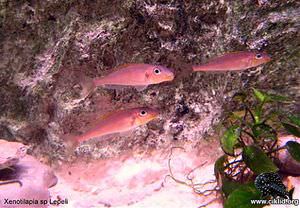
Xenotilapia sp. "lepeli" –
© Joakim Sternborn
Xenotilapia sp. "kilesa" – kilesa.
© Steen Christiansen
Temperatur 24-27,5°C
Volym 160 cm & 500 l
Längd 14 cm
pH 8,8-9,3
Xenotilapia spilopterus – Prickfensspilopterus
© Gonçalo Silvestre
Temperatur 24-27,5°C
Volym 130 cm & 250 l
Längd 12 cm
pH 8,8-9,3